Browsed by
Author: Bruno Zen

A Creative Marketing Agency Develops Campaigns That Inspire Customers

A Creative Marketing Agency Develops Campaigns That Inspire Customers

Creative marketing campaigns help businesses connect with customers, communicate their values, and create memorable experiences. A thoughtful combination of innovative ideas, engaging content, and strategic planning can transform promotional activities into meaningful customer interactions. By understanding audience expectations and delivering relevant messages, marketing professionals can encourage interest, strengthen business visibility, and support long-term development. Inspiring campaigns also create opportunities for businesses to build trust, attract potential customers, and establish lasting relationships through consistent communication.

Creative Thinking Creates Memorable Campaigns

Original ideas bring excitement and personality to marketing activities. Developing creative concepts helps businesses present their products and services in appealing ways while capturing customer attention. Meaningful storytelling and attractive presentations can make promotional messages more memorable.

  • Developing fresh concepts that attract customer attention.
  • Creating inspiring messages that communicate business values.
  • Using storytelling to build emotional customer connections.
  • Designing attractive visuals that support campaign objectives.
  • Introducing engaging promotional ideas that encourage participation.

Understanding Customers Inspires Better Communication

Successful campaigns begin with a clear understanding of customer interests and expectations. Audience research helps marketing professionals identify what people value and develop messages that feel relevant. This customer-focused approach encourages stronger engagement and meaningful interactions.

A Marketingbureau Haarlem can contribute to creative campaign development by combining audience insights, innovative thinking, and strategic communication to create valuable customer experiences.

  • Researching customer preferences and purchasing interests.
  • Identifying audience expectations through meaningful insights.
  • Creating personalized messages for different customer groups.
  • Understanding customer needs to improve campaign relevance.
  • Encouraging conversations through engaging promotional content.

Engaging Content Builds Stronger Customer Connections

Quality content helps businesses communicate information while inspiring audiences to explore their offerings. Interesting descriptions, informative messages, and creative presentations can make campaigns more appealing. Consistent content also supports recognition and encourages customers to remain connected.

  • Creating informative content that provides useful value.
  • Developing attractive promotional messages and descriptions.
  • Highlighting product features through engaging communication.
  • Sharing inspiring stories that connect with audience interests.
  • Maintaining a consistent tone across marketing materials.

Strategic Planning Supports Meaningful Campaign Results

Creative ideas become more effective when supported by thoughtful planning. Establishing clear objectives helps marketing professionals organize activities and select suitable promotional approaches. Regular performance evaluation also provides opportunities to strengthen campaign quality and achieve business goals.

  • Establishing clear objectives for promotional activities.
  • Selecting suitable approaches to reach potential customers.
  • Coordinating creative ideas with business development goals.
  • Evaluating engagement through meaningful performance indicators.
  • Improving future campaigns using valuable audience feedback.

Innovation Encourages Long-Term Customer Loyalty

Innovative campaigns create positive experiences that encourage customers to maintain relationships with businesses. Fresh promotional ideas and consistent communication help audiences feel connected and appreciated. This approach supports customer confidence while creating opportunities for continued business growth.

  • Encouraging participation through interactive campaign ideas.
  • Building trust with transparent and helpful communication.
  • Offering valuable information through creative promotions.
  • Strengthening relationships with consistent customer engagement.
  • Supporting loyalty through memorable customer experiences.

Conclusion

A creative marketing agency brings imagination, strategic thinking, and customer understanding together to develop inspiring campaigns. Through engaging content, meaningful communication, and continuous innovation, businesses can strengthen their visibility and create valuable connections. Consistent creative efforts encourage customer participation, build lasting trust, and support sustainable business development while turning fresh ideas into rewarding opportunities.

Surge Protection Devices Delivering Dependable Power System Protection

Surge Protection Devices Delivering Dependable Power System Protection

Reliable electrical power is essential for maintaining smooth operations, protecting valuable equipment, and supporting consistent performance. Modern electrical systems depend on stable power distribution to deliver efficiency and operational confidence. Surge protection devices play an important role in maintaining this stability by controlling unexpected voltage increases and helping safeguard connected equipment. With suitable protection solutions, electrical installations can achieve greater reliability, improved safety, and long-term performance.

Understanding the Importance of Surge Protection

Voltage surges can occur due to lightning activity, switching operations, and changes in electrical loads. Effective protection helps minimize their impact on sensitive electrical components and connected systems.

Key benefits include:

  • Equipment Protection: Helps protect electrical appliances, control panels, and sensitive electronic components from excessive voltage.
  • Improved Reliability: Supports uninterrupted equipment operation and dependable electrical performance.
  • System Longevity: Reduces electrical stress on important components, supporting extended service life.
  • Operational Stability: Encourages consistent power distribution across different applications.
  • Enhanced Safety: Contributes to a well-protected electrical environment through suitable surge management.

How Surge Protection Devices Support Power Systems

Surge protection devices are designed to respond quickly when electrical voltage rises above acceptable levels. They help redirect excess surge energy away from protected circuits, maintaining safer operating conditions for connected equipment.

Their contribution extends across several electrical applications:

  • Industrial Installations: Protect machinery, automation equipment, and electrical distribution systems.
  • Commercial Buildings: Support reliable operation of lighting, communication equipment, and essential electrical infrastructure.
  • Residential Systems: Help safeguard household electronics, appliances, and electrical installations.
  • Control Systems: Provide additional protection for sensitive monitoring and operational components.
  • Renewable Energy Applications: Support the protection of electrical equipment used in modern energy installations.

Important Features for Dependable Protection

Selecting suitable protection equipment requires attention to technical characteristics and installation requirements. Understanding these features helps create an effective electrical protection strategy.

Important considerations include:

  • Maximum Continuous Operating Voltage: Ensures compatibility with the electrical system.
  • Discharge Capacity: Indicates the device’s ability to handle surge energy.
  • Response Performance: Supports rapid action during voltage disturbances.
  • Protection Levels: Helps determine how effectively connected equipment is safeguarded.
  • Installation Compatibility: Ensures suitable integration with existing electrical arrangements.
  • Status Indication: Makes it easier to monitor device condition and maintenance requirements.

For additional insights into effective electrical protection solutions, exploring https://lsp.global/fr/ can help readers understand available approaches and important protection considerations.

Building a Stronger Electrical Protection Strategy

A dependable protection strategy combines appropriate equipment selection, professional installation, and regular inspection. Coordinating protection across different distribution levels can provide comprehensive coverage throughout an electrical installation.

Useful practices include:

  • Assessing electrical loads and system requirements.
  • Installing protection devices at suitable distribution points.
  • Following recommended installation guidelines.
  • Checking device indicators during routine inspections.
  • Replacing components according to service recommendations.
  • Ensuring proper grounding and electrical connections.

Supporting Long-Term Power Reliability

Surge protection devices contribute significantly to dependable electrical infrastructure. By reducing exposure to unexpected voltage disturbances, they help preserve valuable equipment, maintain operational consistency, and support efficient power distribution. Choosing appropriate protection solutions and maintaining them correctly creates a stronger foundation for electrical safety and performance. With a well-planned approach, homes, commercial facilities, and industrial installations can benefit from reliable power system protection and greater confidence in their electrical operations.

Choosing Durable Flooring Materials for Busy Apartment Households

Choosing Durable Flooring Materials for Busy Apartment Households

Flooring plays an important role in creating comfortable, attractive, and practical apartment interiors. In busy households, floors experience regular foot traffic, furniture movement, occasional spills, and everyday activities. Selecting suitable materials helps maintain a beautiful appearance while supporting long-term convenience. When considering residential developments such as one chuan grove, thoughtful flooring choices can inspire homeowners to prioritize durability, easy maintenance, and visual appeal. The right flooring solution creates a welcoming foundation for family routines while complementing different interior styles.

1. Understanding Everyday Flooring Requirements

Before selecting flooring, households should consider how each room is used and how frequently its surfaces experience activity. Understanding these requirements makes it easier to identify materials that balance strength and appearance.

Important considerations include:

  • Foot Traffic: Choose surfaces designed to withstand frequent walking and regular household movement.
  • Scratch Resistance: Consider materials that maintain their finish despite furniture adjustments and everyday activities.
  • Moisture Protection: Select suitable flooring for areas where occasional spills and humidity are common.
  • Comfort: Explore surfaces that provide a pleasant underfoot experience for children and adults.
  • Maintenance Needs: Prioritize options that support straightforward cleaning routines.

2. Exploring Popular Durable Flooring Materials

Long-Term Property

Different flooring materials offer distinct advantages, allowing homeowners to select options that complement their household requirements.

Porcelain and Ceramic Tiles

  • Provide durable surfaces suitable for frequently used living spaces.
  • Offer numerous colors, patterns, and finishes.
  • Support convenient cleaning with regular sweeping and mopping.
  • Work particularly well in kitchens and moisture-prone areas.

Luxury Vinyl Flooring

  • Provides a comfortable surface with versatile decorative designs.
  • Offers practical resistance to everyday moisture.
  • Creates attractive wood-inspired and stone-inspired appearances.
  • Supports easy maintenance in active household environments.

Laminate Flooring

  • Delivers attractive designs inspired by natural wood.
  • Features protective surface layers that support scratch resistance.
  • Creates a consistent appearance across living and sleeping areas.
  • Offers several textures and finishes for different interior preferences.

3. Matching Flooring with Different Apartment Spaces

Selecting appropriate materials for individual rooms helps create a balanced and functional home.

  • Living Rooms: Consider durable finishes that complement furniture arrangements and frequent gatherings.
  • Bedrooms: Choose comfortable surfaces that encourage a peaceful and relaxing atmosphere.
  • Kitchens: Prioritize easy-clean materials with suitable moisture resistance.
  • Bathrooms: Explore slip-resistant flooring options designed for wet environments.
  • Hallways: Select sturdy finishes capable of handling continuous movement.

4. Maintaining Flooring for Lasting Appeal

Consistent care helps preserve flooring quality and keeps apartment interiors looking inviting.

  • Sweep or vacuum regularly to remove dust and loose particles.
  • Clean spills promptly using appropriate cleaning methods.
  • Attach protective pads beneath furniture legs.
  • Use suitable mats near entrances and frequently used areas.
  • Follow recommended cleaning instructions for each material.
  • Inspect flooring periodically to maintain its overall condition.

Creating Beautiful and Practical Living Spaces

Choosing durable flooring is a valuable investment in everyday residential comfort. By considering household routines, material performance, maintenance requirements, and interior preferences, homeowners can create attractive spaces that remain functional over time. Comparing available finishes and understanding their individual benefits also supports confident purchasing decisions. Thoughtful residential planning, supported by the vision of a one chuan grove developer, highlights the importance of combining practical features with appealing interior environments. With suitable flooring materials and consistent care, busy apartment households can enjoy welcoming, comfortable, and visually harmonious living spaces for years.

Modern Packaging Machines Delivering Consistent Manufacturing Performance

Modern Packaging Machines Delivering Consistent Manufacturing Performance

Reliable manufacturing performance depends on equipment that combines precision, speed, flexibility, and operational consistency. Modern packaging machines play an important role in helping production facilities maintain smooth workflows while meeting changing product requirements. With advanced automation and improved mechanical capabilities, these machines support accurate packaging processes, reduce manual involvement, and encourage dependable production outcomes. Their adaptable designs also help manufacturers maintain quality while managing different packaging formats and production volumes.

Improving Production Efficiency Through Automation

Automated packaging equipment helps streamline essential manufacturing activities by coordinating multiple operations within a single production workflow. These capabilities contribute to better productivity and consistent output.

Key advantages include:

  • Faster Processing: Automated functions support continuous packaging operations and help maintain efficient production schedules.
  • Reduced Manual Work: Mechanized processes minimize repetitive tasks, allowing employees to focus on important operational responsibilities.
  • Consistent Output: Controlled machine movements help maintain uniform packaging results throughout production cycles.
  • Improved Workflow Coordination: Integrated equipment supports smooth material movement between different manufacturing stages.
  • Better Production Planning: Reliable operating speeds make it easier to organize manufacturing activities and manage output expectations.

Maintaining Packaging Accuracy and Quality

Packaging accuracy directly influences product presentation, protection, and overall manufacturing standards. Modern machinery incorporates carefully designed mechanisms that support precise operations across different packaging applications. Manufacturers can also explore advanced equipment solutions through https://www.ketegroup.com/es/ when evaluating suitable technologies for their packaging requirements.

Important quality-focused capabilities include:

  • Precise Material Handling: Controlled feeding systems help position packaging materials accurately during processing.
  • Uniform Sealing Performance: Consistent sealing operations contribute to secure and professionally finished packages.
  • Accurate Cutting Functions: Precision cutting mechanisms support clean edges and consistent material dimensions.
  • Reliable Printing Integration: Compatible printing processes help maintain clear product information and attractive packaging designs.
  • Repeatable Performance: Automated settings support uniform results across multiple production batches.

Supporting Flexible Manufacturing Requirements

Changing product demands encourage manufacturers to adopt machinery that accommodates different packaging styles and materials. Flexible equipment designs make production adjustments more convenient while supporting a wider range of applications.

Several useful features contribute to this adaptability:

  • Adjustable operating settings for different packaging dimensions.
  • Compatible configurations for various material types.
  • Convenient format changes between production requirements.
  • Modular equipment arrangements that support workflow expansion.
  • Versatile processing capabilities for diverse product categories.

Such flexibility allows production facilities to respond efficiently to new requirements while maintaining dependable operating standards.

Strengthening Long-Term Operational Performance

Consistent machinery performance contributes to better resource management and sustainable manufacturing improvements. Well-designed equipment supports organized maintenance routines, dependable operation, and effective production monitoring.

Additional operational benefits include:

  • Energy Efficiency: Optimized machine functions can support responsible energy consumption.
  • Reduced Material Waste: Accurate processing helps improve material utilization throughout production.
  • Simplified Maintenance: Accessible machine components make routine inspection and servicing more convenient.
  • Improved Monitoring: Modern control systems provide useful operating information for production management.
  • Scalable Operations: Adaptable equipment configurations support future manufacturing development.

Modern packaging machines bring together automation, precision, flexibility, and dependable functionality to strengthen manufacturing performance. By investing in suitable machinery, production facilities can improve workflow consistency, maintain packaging quality, and achieve efficient resource utilization. These capabilities create a productive foundation for meeting evolving requirements while supporting long-term manufacturing growth and operational excellence.

Common Solenoid Valve Failure Symptoms Every Operator Should Recognize

Common Solenoid Valve Failure Symptoms Every Operator Should Recognize

Solenoid valves play an important role in controlling fluid and air movement across automated equipment and industrial systems. Recognizing early signs of performance changes helps operators maintain smooth operations, improve equipment reliability, and support consistent productivity. Understanding common failure symptoms also makes routine inspections more effective and encourages timely maintenance.

1. Delayed Valve Response

A properly functioning solenoid valve should respond promptly to electrical signals. Delayed operation can indicate that certain components require attention.

Common signs include:

  • Slow opening or closing movements.
  • Delayed fluid or air flow.
  • Irregular responses to control signals.
  • Inconsistent operation during repeated cycles.
  • Noticeable differences in switching speed.

Identifying these changes early helps operators maintain accurate process control.

2. Unusual Noises During Operation

Sound variations can provide useful information about valve condition. Listening carefully during regular equipment checks helps identify possible performance concerns.

Operators should recognize:

  • Humming sounds that differ from normal operation.
  • Clicking noises without proper valve movement.
  • Vibrations around the valve assembly.
  • Repeated sounds during switching cycles.
  • Unusual mechanical noise during activation.

These observations can guide maintenance teams toward appropriate inspections.

3. Fluid or Air Leakage

Leakage is another important symptom that deserves attention. Maintaining proper sealing supports efficient system performance and helps preserve controlled flow.

Look for these indicators:

  • Visible fluid around valve connections.
  • Air escaping from fittings or joints.
  • Reduced pressure within the system.
  • Moisture around sealing surfaces.
  • Unexpected flow when the valve is closed.

Checking seals, fittings, and connections regularly supports dependable operation.

4. Electrical Performance Irregularities

Electrical components are essential for accurate solenoid valve operation. Changes in electrical performance may affect switching reliability.

Important warning signs include:

  • Inconsistent coil activation.
  • Excessive coil heating.
  • Interrupted electrical connections.
  • Irregular response to control signals.
  • Failure to activate when energized.

Operators should arrange suitable electrical inspections and follow established safety procedures before investigating energized components.

5. Reduced or Irregular Flow

Changes in flow can influence overall equipment efficiency. Recognizing these symptoms helps operators maintain stable operating conditions.

Watch for:

  • Lower-than-expected flow rates.
  • Fluctuating fluid movement.
  • Inconsistent pressure levels.
  • Restricted passage through the valve.
  • Uneven performance across operating cycles.

Cleaning and inspecting suitable internal components can help restore consistent flow when performed according to maintenance requirements.

6. Practical Steps for Early Detection

A structured inspection routine makes identifying potential problems easier. Operators can strengthen equipment care through simple practices:

  • Monitor switching performance during normal cycles.
  • Inspect external connections for leakage.
  • Listen for unusual operating sounds.
  • Check electrical connections safely.
  • Record recurring performance changes.
  • Follow recommended cleaning schedules.
  • Replace worn components when necessary.

For additional guidance on recognizing common warning signs, operators can explore https://www.vincervalve.com/solenoid-valve-failure-symptoms/ to understand important symptoms and maintenance considerations.

7. Supporting Long-Term Valve Reliability

Recognizing failure symptoms is an important part of maintaining dependable industrial operations. Early attention to unusual sounds, leakage, electrical irregularities, and inconsistent flow helps operators make informed maintenance decisions.

Regular inspections, appropriate component selection, correct installation, and preventive maintenance all contribute to reliable valve performance. By understanding these common symptoms and responding promptly, operators can support smoother equipment operation, improve process consistency, and encourage long-term system efficiency.

Compact Perfume Bottles Deliver Practical And Stylish Packaging

Compact Perfume Bottles Deliver Practical And Stylish Packaging

Perfume packaging plays an important role in combining fragrance presentation with everyday convenience. Compact perfume bottles offer an appealing solution for people who appreciate portability, elegant design, and practical storage. Their smaller dimensions make them suitable for handbags, travel accessories, personal collections, and convenient fragrance application throughout the day. With attractive shapes, quality materials, and functional dispensing features, these bottles create a balance between visual sophistication and everyday usability.

Compact Designs Improve Everyday Convenience

Smaller perfume bottles provide flexibility for different lifestyles and fragrance preferences. Their convenient dimensions allow users to carry their favorite scents comfortably while maintaining an organized personal collection.

Several advantages make compact packaging appealing:

  • Easy portability: Lightweight dimensions support convenient everyday carrying.
  • Space-saving storage: Compact shapes fit comfortably into handbags and storage compartments.
  • Convenient application: Smaller bottles make fragrance access simple throughout the day.
  • Travel-friendly presentation: Portable designs suit different travel and personal care requirements.
  • Organized collections: Multiple compact bottles can be stored neatly together.

Elegant Glass Construction Enhances Appearance

Material selection contributes significantly to the visual quality and practical performance of perfume packaging. Glass provides an attractive finish while allowing fragrance colors to remain visible through transparent surfaces. Carefully manufactured bottles also create a refined appearance that complements different fragrance collections.

Important glass features include:

  • Clear glass for attractive fragrance visibility.
  • Consistent thickness for balanced construction.
  • Smooth surfaces for comfortable handling.
  • Refined edges for polished presentation.
  • Durable construction for dependable everyday use.

Exploring Versatile 30ml Perfume Bottle Designs

A 30ml capacity offers a practical balance between portability and fragrance storage. This size supports personal collections, smaller product presentations, and convenient fragrance use without requiring bulky packaging.

Exploring https://www.huaglass.com/30ml-perfume-bottle/ provides useful inspiration for understanding different bottle shapes, glass finishes, and packaging possibilities.

Popular design characteristics include:

  • Minimalist silhouettes: Create clean and contemporary visual appeal.
  • Decorative glass finishes: Add attractive details to fragrance packaging.
  • Elegant bottle caps: Complement the overall design and appearance.
  • Transparent construction: Highlights the fragrance color and clarity.
  • Distinctive proportions: Help create recognizable packaging identities.

Functional Features Support Reliable Fragrance Use

Practical packaging combines attractive appearance with convenient dispensing and storage features. Thoughtful component selection helps improve the overall fragrance experience while supporting consistent product presentation.

Useful functional elements include:

  • Secure closures that support convenient storage.
  • Fine mist sprayers for controlled fragrance application.
  • Compatible dispensing components for smooth operation.
  • Comfortable bottle shapes for easy handling.
  • Stable bases for convenient upright placement.

Customization Creates Distinctive Packaging Identity

Creative customization allows perfume bottles to reflect different fragrance personalities and presentation preferences. Compact glass designs provide an adaptable foundation for decorative finishes and coordinated packaging concepts.

Customization possibilities include:

  • Customized glass colors and surface treatments.
  • Attractive printing and decorative detailing.
  • Distinctive cap designs and finishes.
  • Personalized bottle shapes and proportions.
  • Coordinated packaging accessories for visual consistency.

Combining Style With Practical Packaging

Compact perfume bottles bring together portability, attractive glass construction, and convenient functionality. Their versatile designs support modern fragrance collections while providing practical storage and application benefits. By combining suitable materials, thoughtful dimensions, and creative finishing options, these bottles deliver appealing packaging solutions that enhance fragrance presentation and everyday experiences.

Industrial Ball Valves Deliver Reliable Fluid Control Solutions

Industrial Ball Valves Deliver Reliable Fluid Control Solutions

Industrial fluid management requires dependable equipment that supports smooth operations, accurate flow regulation, and consistent performance. Valves play an essential role in maintaining controlled movement across different piping systems. Their practical construction and efficient operating capabilities make them valuable components in various industrial applications. Industrial Ball Valves deliver reliable fluid control solutions by combining durable construction, effective shutoff capabilities, and convenient operation. Their adaptable designs help industries maintain efficient processes while supporting long-term operational reliability.

Efficient Flow Regulation for Industrial Systems

Consistent fluid movement is important for maintaining productivity and achieving dependable process performance. Ball valves provide straightforward flow control through a rotating ball mechanism that allows fluid to pass through or stops its movement when required.

Their functional design offers several advantages:

  • Supports smooth fluid movement across connected pipelines.
  • Provides effective opening and closing operations.
  • Helps maintain consistent flow management.
  • Enables convenient control through simple operating mechanisms.
  • Supports efficient performance across different industrial processes.

Durable Construction Enhances Operational Reliability

Material quality and structural strength contribute significantly to valve performance. Carefully manufactured components help maintain dependable functionality under different operating conditions. Strong construction also supports consistent operation throughout extended service periods.

Selecting suitable materials provides valuable benefits, including:

  • Excellent resistance to regular operational wear.
  • Strong structural stability during continuous usage.
  • Reliable sealing performance for controlled fluid handling.
  • Compatibility with various industrial fluid requirements.
  • Long-lasting functionality with appropriate maintenance.

Versatile Applications Across Industrial Processes

Different industries require dependable flow management solutions to support their daily operations. Ball valves offer versatile configurations that accommodate different pipeline arrangements, fluid characteristics, and operating requirements. Their adaptability makes them suitable for multiple industrial environments.

Common applications include:

  • Water distribution and fluid transportation systems.
  • Chemical processing and manufacturing operations.
  • Oil and gas handling applications.
  • Industrial heating and cooling arrangements.
  • Production facilities requiring dependable pipeline control.

Understanding Flow Direction for Better Performance

Correct flow orientation contributes to effective valve functionality and suitable installation practices. Understanding the internal design and recommended operating direction helps maintain appropriate fluid movement throughout connected systems. Reviewing https://www.vincervalve.com/ball-valve-flow-direction also helps users understand how valve configuration supports efficient pipeline operation.

Important considerations include:

  • Checking directional markings provided on valve assemblies.
  • Understanding the internal passage design.
  • Matching valve specifications with pipeline requirements.
  • Maintaining suitable installation alignment.
  • Following recommended operating guidelines.

Simple Operation Supports Process Efficiency

Convenient operation is another important advantage of ball valves. Their quarter-turn mechanism allows operators to control fluid passage with minimal movement, making them practical for applications that require responsive flow management. This straightforward functionality supports efficient industrial workflows.

Additional operational benefits include:

  • Quick opening and closing capabilities.
  • Convenient manual and automated control options.
  • Effective shutoff for improved process management.
  • Reduced operating complexity through practical designs.
  • Easy integration into suitable piping arrangements.

Reliable Solutions for Long-Term Industrial Performance

Choosing appropriately designed valves contributes to stable operations and dependable fluid management. Regular inspection, correct installation, and suitable maintenance practices further support their functionality. With the right specifications and operating conditions, these components help maintain consistent industrial performance.

Overall, industrial ball valves combine versatility, durability, and convenient operation to support modern fluid handling requirements. Their dependable functionality makes them valuable solutions for industries seeking efficient flow regulation, controlled fluid transportation, and reliable pipeline performance.

Professional Tailors Craft Refined Outfits For Business And Celebrations

Professional Tailors Craft Refined Outfits For Business And Celebrations

Well-crafted clothing brings elegance, comfort, and individuality together, making professional tailoring an essential part of a versatile wardrobe. Skilled tailors transform carefully selected fabrics into refined outfits that suit business responsibilities, formal gatherings, and memorable celebrations. Through precise measurements, thoughtful designs, and excellent stitching, they create garments that complement personal preferences while maintaining a polished appearance. Their craftsmanship helps individuals express confidence and enjoy clothing that feels distinctive, comfortable, and beautifully finished.

Precision Tailoring Creates A Polished Appearance

Accurate measurements and balanced proportions form the foundation of elegant clothing. Professional tailors carefully assess garment lengths, shoulder shapes, sleeve dimensions, and waist measurements to achieve a flattering fit that supports natural movement.

  • Carefully measured garment proportions
  • Well-shaped shoulders and sleeves
  • Balanced jacket and trouser lengths
  • Comfortable fits for everyday movement
  • Neatly finished edges and seams

These details help create a sophisticated silhouette, ensuring each outfit looks coordinated and feels comfortable throughout different activities.

Business Outfits Reflect Professional Confidence

Well-tailored business clothing creates a refined appearance through clean lines, coordinated colors, and carefully selected fabrics. Structured jackets, fitted trousers, and crisp shirts work together to create outfits that feel appropriate for meetings, presentations, and professional gatherings.

Tailors can adjust traditional designs to match individual preferences while preserving the smart appearance expected from business attire.

Celebration Wear Highlights Personal Elegance

Special occasions offer wonderful opportunities to explore distinctive designs and elevated finishing details. Professional tailoring helps bring these preferences to life through carefully shaped garments, attractive textures, and personalized decorative elements.

  • Elegant suits for formal celebrations
  • Refined jackets with distinctive lapels
  • Carefully coordinated shirts and trousers
  • Attractive fabrics with subtle textures
  • Personalized details for special occasions

These options allow individuals to enjoy clothing that feels memorable while maintaining comfort and sophistication throughout celebrations.

Fabric Selection Enhances Garment Quality

Choosing appropriate fabrics influences the appearance, comfort, and overall performance of tailored outfits. Skilled tailors can help select materials according to the garment’s purpose, desired structure, and preferred finish.

Breathable cotton, lightweight wool blends, and smooth woven fabrics offer different benefits, allowing customers to balance elegance with practical comfort.

Fine Stitching Demonstrates Skilled Craftsmanship

Consistent stitching and precise finishing contribute significantly to a garment’s durability and visual appeal. Attention to small construction details helps maintain the outfit’s shape while creating a smooth, professional finish.

  • Even stitching along garment seams
  • Reinforced areas for added durability
  • Secure buttons and fastenings
  • Symmetrical pockets and detailing
  • Carefully pressed and finished fabric

These techniques demonstrate the value of experienced workmanship and help ensure that every garment reflects care and precision.

Personalized Designs Support Individual Style

Tailoring allows customers to participate in creating clothing that reflects their unique preferences. Choices involving collar shapes, sleeve styles, lapel designs, pocket placement, and garment cuts provide opportunities for individual expression.

Through clear communication and thoughtful consultations, tailors can combine personal ideas with practical recommendations to achieve attractive, wearable results.

Reliable Service Makes Tailoring Rewarding

Professional service enhances the tailoring experience by emphasizing attentive communication, suitable recommendations, and careful alterations. Understanding customer expectations helps tailors deliver outfits that meet preferred measurements, styling goals, and comfort requirements.

Ultimately, professional tailors combine creativity, precision, and craftsmanship to produce refined outfits for business and celebrations. Their dedication to quality fabrics, flattering fits, and thoughtful finishing helps individuals enjoy clothing that expresses confidence, elegance, and personal style.

Michael Tailors
Phone: +66827318786
Url: https://michaeltailors.com/
Room 1D-09, End of zone – D, G-floors, Mbk center
PathumWan, Bangkok 10330

Chemical Protective Coverall with Sealed Seams: When Is It the Right Choice?

Chemical Protective Coverall with Sealed Seams: When Is It the Right Choice?


Chemical Protective Coverall A stitched seam is a row of needle holes. That’s the whole problem, and it’s the reason you’re reading this instead of just grabbing the cheapest chemical protective coverall off the pallet.
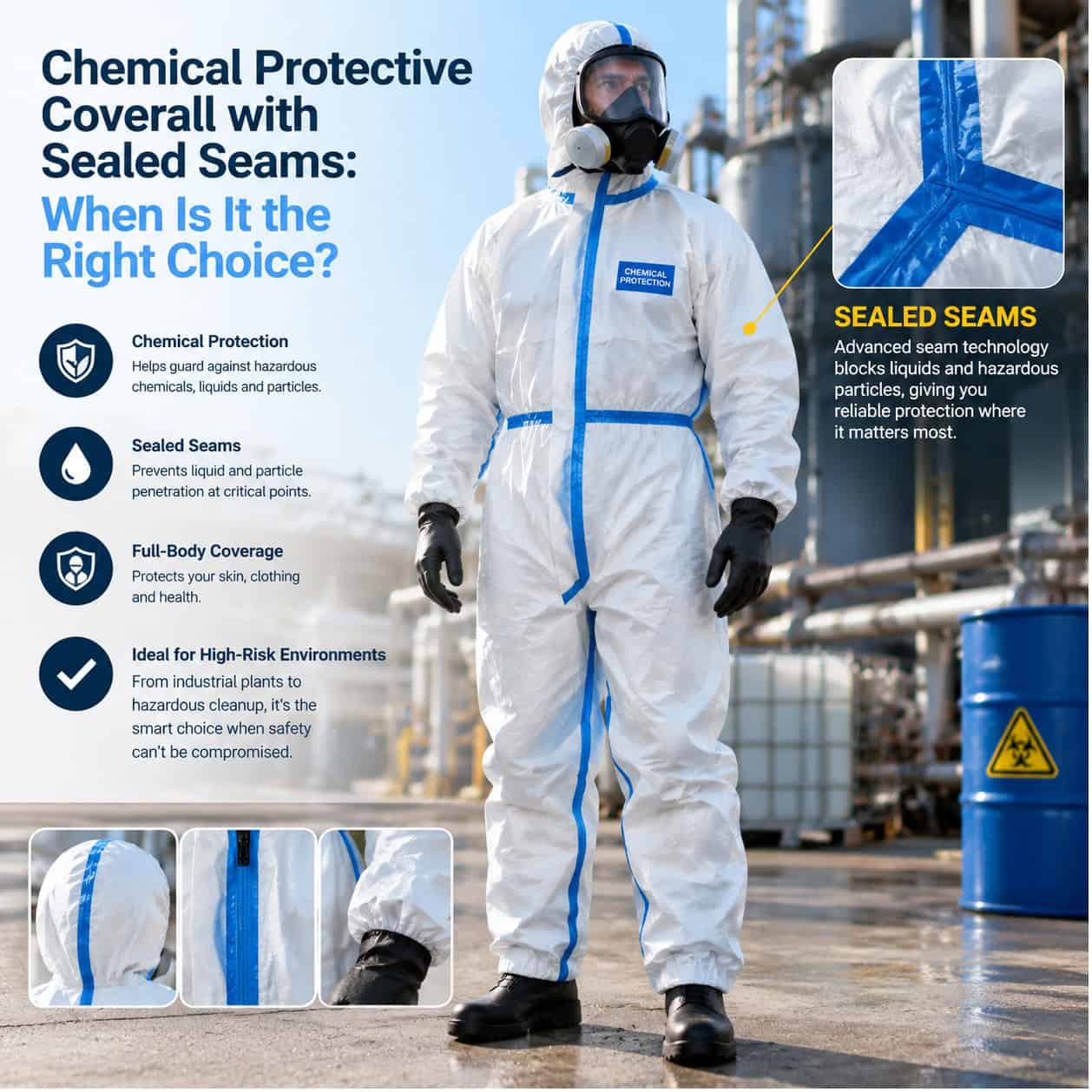
Every standard disposable coverall has seams, and every seam is made by pushing a needle through fabric hundreds of times. Serged seams, bound seams, double-stitched seams, they’re all strong enough to hold a suit together. None of them are liquid-tight. Liquid chemical finds those puncture channels the way water finds a crack in a basement wall. It doesn’t need pressure, it doesn’t need a long soak. A splash on the shoulder during a pump transfer, a mist cloud settling on the sleeve while you spray, a fine powder working its way through a stitch line over twenty minutes of movement, that’s all it takes.

Sealed seams are the fix. Heat-sealed tape bonded over the seam, or ultrasonically welded fabric, closes the channel. The suit stops being a fabric shell with a hundred tiny leaks and starts behaving like a barrier.

So when is that worth paying for? Here’s the honest version, not the catalog version.

Sealed seams are the right call when the hazard can travel as a liquid, an aerosol, or a fine particle.

That covers more ground than most people expect. Type 3 and Type 4 suits, liquid-tight and spray-tight respectively, are almost always taped. Think chemical transfer and drum handling where a hose can pop. Think spray painting with isocyanates, where the mist is the exposure route and the lungs and skin are both in play. Think pesticide mixing and application, where concentrate splashes are the norm and the dose that matters is small. Think tank cleaning, confined space entry, spill response where you don’t yet know what’s in the puddle.

Fine particulates count too. Asbestos abatement, silica, lead dust, potent pharmaceutical compounds. Those particles are small enough to ride through a stitch hole, and they don’t need to be wet to do damage. If your exposure assessment says the airborne concentration is meaningful and the material is toxic by inhalation or ingestion, a sealed seam is cheap insurance.

Then there’s the case that gets argued about most: you don’t know what you’re walking into. Unknown spill, abandoned drum, a container that’s been sitting in a warehouse since before anyone currently employed got hired. When the hazard is unidentified, you default to the highest reasonable protection. Taped seams, taped zipper flap, taped glove and boot junctions. Nobody has ever been criticized for over-protecting on an unknown.

Now the part the sales reps skip.

Sealed seams do not upgrade the fabric. This is the single most expensive misunderstanding in the category. If the suit’s film or nonwoven isn’t rated for the chemical you’re facing, taping the seams just gives you a well-constructed suit that the chemical passes straight through. Permeation doesn’t care about your seam construction. Read the breakthrough data. ASTM F739, EN 652, whichever standard applies in your market. Find your chemical, find the breakthrough time, and if it’s under the duration of your task, walk away from that suit regardless of how good the seams look.

Sealed seams cost money. Typically two to three times the price of a comparable stitched suit. That’s real budget, and it’s the reason people try to talk themselves out of it. Sometimes they’re right to. If your exposure is dry, coarse, low-toxicity dust for fifteen minutes, a sealed seam is decoration. Spend the difference on gloves that actually fit and a half day of training. That’ll prevent more injuries.

Heat stress is the trade-off nobody puts on the spec sheet. Sealed suits are hotter. The tape doesn’t breathe, the film doesn’t breathe, and you’re sealed into a plastic envelope in a way a stitched suit is not. If the job is heavy, the environment is hot, and the chemical hazard is mild, an over-specified suit can create a bigger risk than it removes. People pass out in coveralls every summer. Match the protection to the hazard, not to your anxiety level.

Seam quality varies wildly, and you can spot it before you buy. Look at the tape width. Look at whether it’s continuous or spot-applied. Look at whether it’s wrinkled or lifting at the ends. Cheap taped seams peel after an hour of shoulder movement, and once the tape lifts you’re back to a stitched suit with extra steps. Squeeze the seam, flex it, see if the bond holds. A good supplier won’t mind.

The rest of the suit has to keep up. A taped seam on a suit with an unsealed zipper flap is a joke. Same for a loose hood-to-respirator interface, or a glove connection that lets liquid run down your forearm. Sealed construction only works as a system. Check every entry point, because contamination doesn’t read the marketing copy.

Fit deserves more attention than it gets. Too loose and you snag on every valve and ladder rung, which tears seams. Too tight and you stress the tape every time you reach overhead. Neither failure mode shows up in a spec sheet, both show up in incident reports.

And then there’s doffing. You can buy the best sealed suit on the market and defeat it in ninety seconds if you can’t get out of it without smearing the contaminated exterior across your neck. If your team hasn’t practiced removal, the seam construction bought you very little. This is a training problem, not a product problem, but it’s the one that decides whether the product works.

A simple decision rule, if you want one. Ask what form the chemical takes at the point of contact. Liquid, mist, spray, or fine dust, sealed seams. Coarse dry particulate with a low toxicity profile and short exposure, stitched is fine and your budget is better spent elsewhere. Unknown or mixed hazard, sealed, every time.

The coverall is one layer in a chain. Sealed seams are what stop that layer from being a formality.

Solvent Ink Adhesion Problems: How to Improve Printing on Different Media

Solvent Ink Adhesion Problems: How to Improve Printing on Different Media


Buying UV InkIf your solvent ink rubs off like cheap paint on a rainy fence, the ink isn’t the only suspect. Adhesion is a system problem. Substrate, surface prep, ink chemistry, drying, and the environment all vote. When one votes no, the print fails. That’s true whether you’re printing on flexible vinyl, rigid PET, low-surface-energy polypropylene, coated paper, metal, or glass.

ADHESION IS A RELATIONSHIP, NOT A PROPERTY

A solvent ink doesn’t “stick” in the abstract. It wets a surface, flows into microscopic valleys, and forms bonds. Those bonds can be mechanical, chemical, or both. For wetting to happen, the substrate’s surface energy needs to be higher than the ink’s surface tension. Low surface energy plastics like PE and PP are notorious because they sit below many solvent inks. Dyne pens and contact angle measurements give you a number, not a guess. If the number is low, no amount of press tweaking will fix it.

Treatment is the first lever. Corona, plasma, and flame treatment raise surface energy and add polar groups. The catch is timing. Treatment fades. Print immediately after treating, or store treated stock in a controlled way. Over-treatment can create a weak boundary layer of low-molecular-weight debris, so more is not always better. Test treated substrate with a dyne pen and a tape pull before you run a full roll.

THE SUBSTRATE DOESN’T CARE ABOUT YOUR SCHEDULE

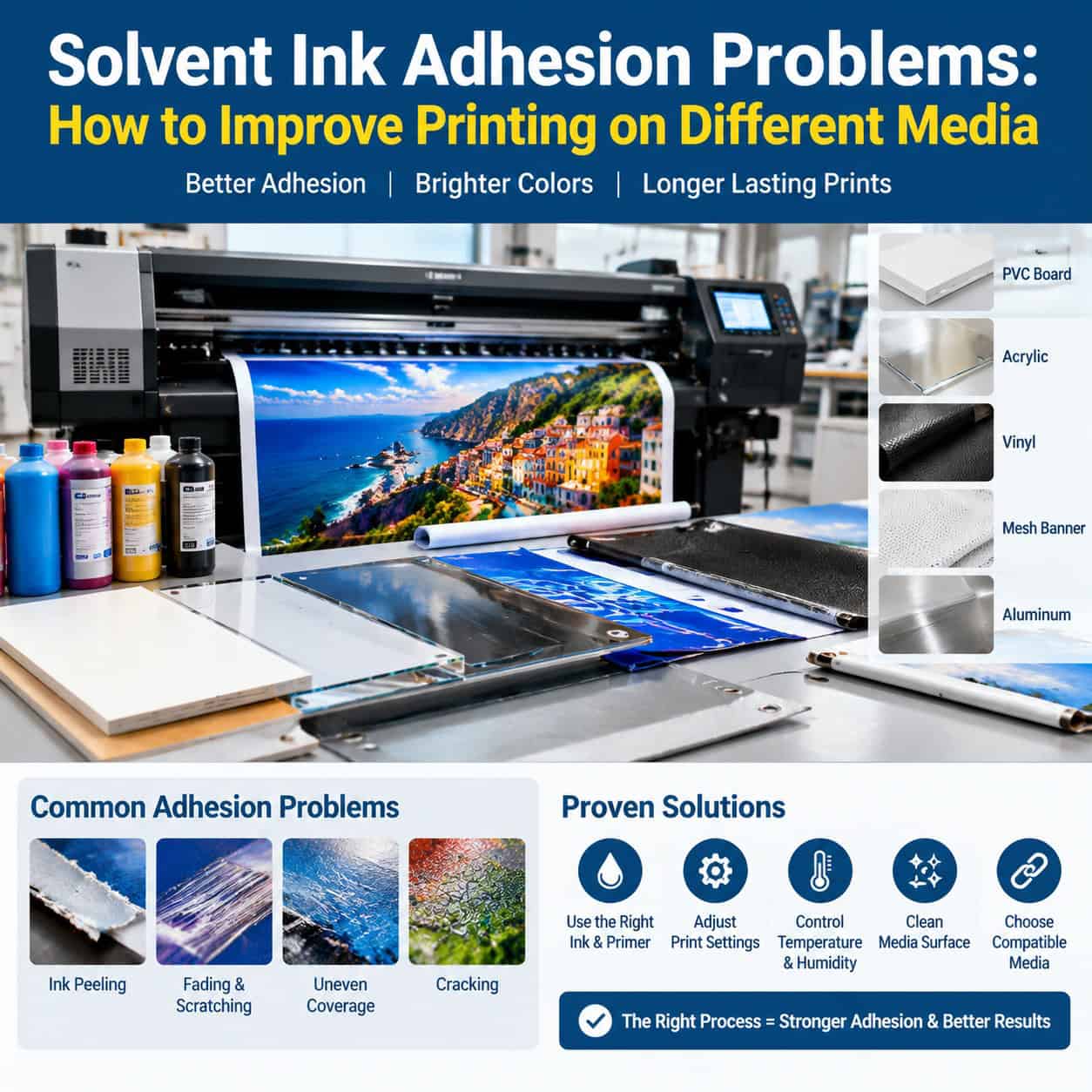
Different media fail for different reasons. Vinyl often contains plasticizers that migrate to the surface and soften the ink film. A standard solvent ink may look fine for a day, then peel or become tacky. You need a plasticizer-resistant resin system or a primer designed for vinyl. PET has decent surface energy, but its surface can be too smooth for mechanical grip. Corona treatment or a primer helps. PP and PE need treatment plus a primer, often chlorinated polyolefin based, to bridge the gap. Coated papers can absorb solvent too quickly or too slowly. If the coating is too tight, the ink sits on top and rubs off. If it’s too open, the ink strikes in and loses gloss or color strength. Metal and glass bring their own issues: oils, oxidation, and smooth surfaces that demand cleaning and sometimes a silane or titanate adhesion promoter.

CHEMISTRY THAT ACTUALLY STICKS

Ink formulation is not a black box, even if some suppliers treat it like one. The resin system does the heavy lifting. Polyurethane resins often balance flexibility and adhesion on plastics. Acrylics can offer outdoor durability. Chlorinated polyolefins are common for untreated or lightly treated PP and PE. Solvent blends matter too. A solvent that evaporates too fast can dry before the ink wets the surface. A solvent that evaporates too slow can trap solvent, cause blocking, or attack the substrate. Adhesion promoters can help, but they must match the substrate. Silanes for glass and metal, titanates and zirconates for certain plastics. Watch out for additives that fight adhesion. Silicone slip agents, waxes, and some surfactants migrate to the surface and create a release layer. If you switch additives, retest adhesion.

DRYING IS NOT JUST BLOWING AIR

Solvent ink adhesion often fails in the dryer, not on the substrate. Too much heat too fast skins the ink, traps solvent, and prevents proper bonding. Too little heat leaves the film soft, prone to offset, and weak. You need a drying profile, not a single temperature. Preheat gently, then ramp. Airflow matters as much as heat. For heat-sensitive media, use lower temperatures and higher air velocity. For non-porous substrates, solvent has nowhere to go but up, so dwell time and exhaust are critical. Retained solvent can also attack the substrate or cause delamination later. If you use two-part inks, respect mix ratio, induction time, and pot life. Under-cured ink will fail rub and chemical tests. Over-cured ink can become brittle and crack.

THE ENVIRONMENT IS A SILENT PARTNER

Humidity, temperature, and static all influence adhesion. High humidity can condense moisture on a cold substrate, creating a barrier between ink and surface. Static attracts dust and causes pinholes. Cold substrates lower surface energy and slow solvent release. Warm substrates can flash off solvent too quickly. Keep the pressroom stable. Clean rollers, belts, and guides. Oils from hands and machinery are adhesion killers. You don’t need a cleanroom for every job, but you do need discipline.

TEST LIKE YOU MEAN IT

A tape pull after five minutes proves almost nothing. Adhesion can build over 24 hours or more. Use the right tests for the job: ASTM D3359 cross-hatch tape, coin scratch, rub test, solvent rub, flex and crease, heat seal, and weather exposure. Test the actual production substrate, ink, speed, and cure. Lab samples that sat for a week are not production samples. Keep a log. When a job fails, you want data, not opinions.

A PRACTICAL TRIAGE PLAN

When adhesion fails, identify the failure mode first. If the ink peels cleanly off the substrate, the problem is usually surface energy, contamination, or missing primer. If the ink splits within itself, it’s likely cohesion, cure, or resin choice. If it rubs off, suspect surface prep or under-cure. Check surface energy with a dyne pen. Clean the substrate. Treat it. Apply the right primer. Adjust ink viscosity and solvent blend. Fix the drying profile. Retest after 24 hours. Change one variable at a time, or you’ll learn nothing.

THE MARKETING PART, WITHOUT THE FLUFF

You can buy ink by the drum and still lose money on adhesion failures. Scrap, rework, customer returns, and press downtime cost more than the ink. The smarter buy is a solvent ink system with substrate-specific primers, clear technical data, and a partner who will audit your corona treatment, primer application, and drying zones. Ask for adhesion test kits. Ask for on-press support. Ask what happens when you switch from vinyl to PET to PP in the same shift. If the answer is a shrug, keep shopping.

Adhesion is not magic. It’s measurement, chemistry, and discipline. Get the surface right, match the ink to the media, control the dry, and test like your reputation depends on it. Because it does